Hover over the the following links and you will see this in action.
- See linked data for Persepolis via awld.js
- Persepolis in Pleiades http://pleiades.stoa.org/places/922695
Comments are always welcome.
Thursday, March 29, 2012
Rubin v. Iran Cases Move Forward in First Circuit and U.S. Supreme Court
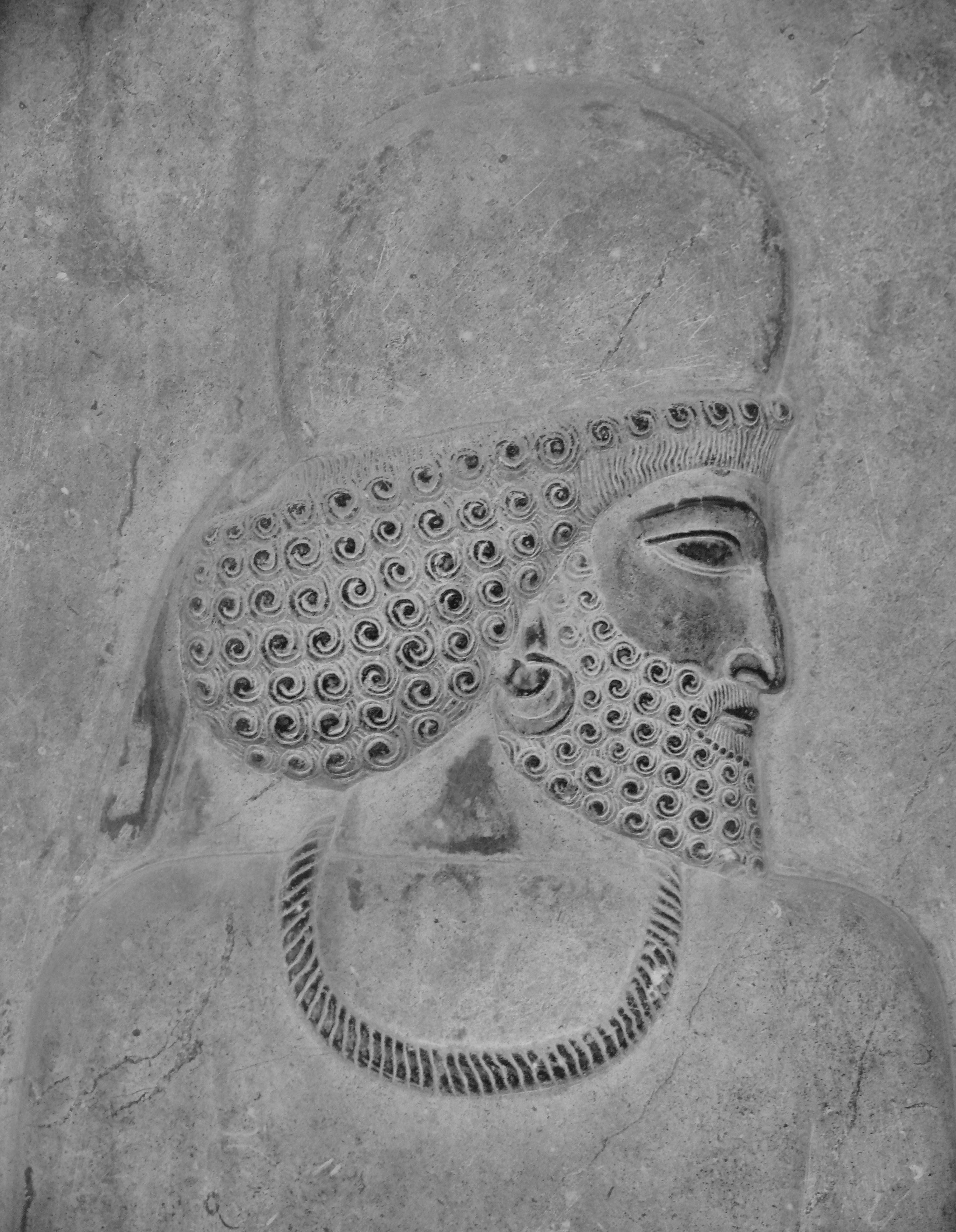
Photo credit: Alborzagros. CC.
Jenny Rubin and others hurt by a 1997 terrorist attack in Israel filed a 92 page brief yesterday in the First Circuit Court of Appeals. Rubin et al. v. Islamic Republic of Iran v. Museum of Fine Arts and Harvard University et al. is a case where the appellants seek to enforce a judgment awarded to them under the Terrorism Risk Insurance Act of 2002 (TRIA) by acquiring cultural artifacts claimed to be owned by Iran. The objects sought are located in Boston and Cambridge, Massachusetts. Meanwhile, Rubin et al. have also filed an appeal of their Seventh Circuit court case with the U.S. Supreme Court. That case involves an attempt to attach objects located at museums in Chicago.
Read the rest here
"Looking at Persian sources, primarily the Persepolis tablets, Harrison discusses the problems with this source of information: namely that they derive from a very specific time period (late 6th and early 5th centuries) and location and are written in Elamite and thus do not reflect the entire empire".There has already been a response to the review.
"When discussing royal women, who are often depicted as crueller than the Persian kings, Harrison notes two things: first: that Classical depictions show Persian royal women acting primarily in the interests of their families, holding vast power and demonstrating masculine traits. However, Achaemenid scholarship views such depictions as clichéd and the result of misogyny or ignorance and, therefore, to be dismissed. Second: that despite the above opinions dismissing Greek accounts, most Greek sources do loosely support Persian sources, in particular the Persepolis tablets which show "enterprising and resolute" Persian royal women. It is surmised that Achaemenid scholarship has too great a desire to reverse the negative reputation of Persian women noting that it is not only Persian women in Greek sources who are depicted as cruel in the interests of their families".
Bulletin of the Institute of Classical Studies
© Institute of Classical StudiesDecember 2011
Volume 54, Issue 2
Article first published online: 1 DEC 2011 | DOI: 10.1111/j.2041-5370.2011.00020.x
Article first published online: 1 DEC 2011 | DOI: 10.1111/j.2041-5370.2011.00021.x
Alert: Persepolis Tablets Threatened By Senate Sanctions Bill
A Senate committee voted yesterday to make it easier for individuals to seize and auction off priceless ancient Persian antiquities held by American museums and universities in order to collect court judgments against the Iranian government. Already, lawyers are in court trying to seize the Persepolis Tablets – priceless 2,500 year-old artifacts that provide a unique first-hand account of life in the Persian Empire under Darius the Great. If this proposal becomes law, the Persepolis Tablets are almost certain to be confiscated from the universities and museums and sold to the highest bidders.
The Persepolis Tablets are a part of our rich heritage that should continue to be shared at museums and universities, not auctioned off like cheap items on eBay.
Take action now to protect our heritage!
This proposal by Senator Menendez (D-NJ) will soon be considered by the full Senate as part of its latest Iran sanctions bill – which builds on the broad Central Bank of Iran sanctions spearheaded by Senator Menendez just last December. This is perhaps one of the starkest examples yet of how broad sanctions punish ordinary Iranians and Iranian Americans, not the Iranian government.
With the Iranian people facing unprecedented repression at home and economic warfare from abroad, we must stand united against collective punishment and the looting of our very heritage.
The Iranian government has harmed many innocent lives, and its victims should receive just compensation. But we must be able to protect the rights of victims without attacking our Iranian heritage.
Take action now to stop Congress from looting our history!Persepolis in Pleiades http://pleiades.stoa.org/places/922695
NIAC has led the Iranian-American community’s efforts to protect the Tablets, fighting in the courts, the Congress, and even the White House to protect them. In order to permanently secure these and all other priceless Persian artifacts under threat, NIAC has called on Congress to change the law to protect all cultural artifacts held by American museums and universities so our heritage will never again come under attack

Dr. Paper is Professor Emeritus of Linguistics and near Eastern Languages, and is the Editor of the Hebrew Union College Annual, HUC-JIR/Cincinnati. He received a doctorate from the University of Chicago. Dr. Paper taught at the University of Michigan at Ann Arbor, and joined HUC-JIR as the Dean of Graduate Studies. His specialties are Persian studies, concentrating on the history of the Persian language and on the ancient languages of Iran, and Yiddish literature.
Education
Lecture Titles
- Ph.D., University of Chicago (1951)
- History of the Yiddish Literature
- The Languages of the Jews Throughout History
- Sholem Aleichem as a Social Critic
It is well to remember that a Martian observing his first baseball game would be quite correct in concluding that the last two words of the National Anthem are: PLAY BALL!
This thesis explores the implications that the outcome of a certain U.S. lawsuit involving antiquities could have on practices and programs in the United States, related to cultural heritage and history. This paper examines the Rubin et al case, which sought to attach a collection of ancient Persian artifacts (known as The Persepolis Tablets) as a source of legal compensation.You may download this document through your Library.
Presented as a case study, and using primary and secondary research sources, this paper analyzes the Rubin et al lawsuit and the factors that led to its initiation, and seeks to determine how and why adverse consequences could result from its final ruling.This thesis demonstrates that the final decision in the lawsuit could leave a negative impact on a number of practices related to cultural heritage in the United States, especially with regards to cultural and academic institutions such as museums and universities.
The rush to document thousands of ancient texts before they are sent back to Iran, or sold, reveals the daily workings of the Persian Empire
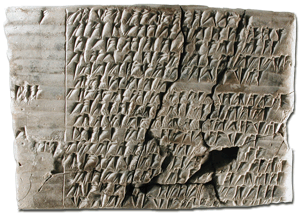
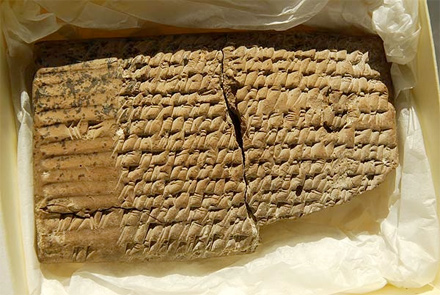
Tens of thousands of clay tablets and fragments from Persepolis are written in cuneiform to express Elamite, an ancient language of western Iran.
(Courtesy Persepolis Fortification Archive Project, Oriental Institute)
Tensions between Iran and the United States have rarely run higher, with both governments sparring over alleged terror plots, disputing the nature of Iran’s nuclear program, and vying to influence the uprisings across the Arab world. But in Chicago and Boston courtrooms, the two countries have found rare common ground—neither wants ancient tablets from the royal palace of Persepolis in Iran to end up on the auction block. To the relief of scholars, two recent court rulings may give them their joint wish, preserving open access to what is the most significant source of information on the ancient Persian Empire uncovered to date.
In the early 1930s, during excavations of Persepolis, University of Chicago archaeologist Ernst Herzfeld unearthed tens of thousands of fragments of fragile clay tablets dating from about 500 B.C. The fragments were packed into 2,353 cardboard boxes and shipped to the university’s Oriental Institute. The Iranian government of the day allowed the export, with the understanding that the tablets would be translated and then returned. But the task of piecing together and understanding the vast number of fragments has been under way for more than seven decades and the majority of the collection remains in Chicago. Now, fearing loss of the archive, the university has moved into high gear to create thousands of digital images of the tablets, which record the day-to-day accounts of the empire during the reign of Darius the Great (521–486 B.C.) and include records of those traveling on behalf of the king, lists of workers’ rations, and careful notation of offerings made to deities.
Researchers hope to have most of this intensive effort completed within the next two years. To get the job done, the institute has assembled what Gil Stein, director of the Oriental Institute, calls a “dream team” of textual scholars, archaeologists, and technical experts in digital cataloguing to take images of the tablets and make them available for public use. Translations are also being done, though it will take much longer to complete that daunting task. “Whether they are seized for sale or the government of Iran demands them back, the tablets will be out of the building soon. We all understand how important and urgent this is,” says Stein.
To read more, find ARCHAEOLOGY in your local newsstand or bookstore, or click here to buy a copy of the issue online. And if you'd like to receive ARCHAEOLOGY in your mailbox, click here to subscribe.
Andrew Lawler is a contributing editor at ARCHAEOLOGY.
See here for a previous announcement about the PFA from Inscriptifact.We have just uploaded 2112 new images of 229 new texts from the Persepolis Fortification Archive. Most of these images are RTI images (Reflection Transformation Imaging). The Greek, Akkadian and Old Persian tablets are now posted.In addition, we have added the Assyrian Reliefs from the Oriental Institute, RTIs of KTU 1.18, and RTIs of objects from USC's Archaeological Research collection and the Los Angeles Unified School District's Art and Artifact Collection.

The InscriptiFact Project is a database designed to allow access via the Internet to high-resolution images of ancient inscriptions from the Near Eastern and Mediterranean Worlds. The target inscriptions are some of the earliest written records in the world from an array of international museums and libraries and field projects where inscriptions still remain in situ. Included are, for example, Dead Sea Scrolls; cuneiform tablets from Mesopotamia and Canaan; papyri from Egypt; inscriptions on stone from Jordan, Lebanon and Cyprus; Hebrew, Aramaic, Ammonite and Edomite inscriptions on a variety of hard media (e.g., clay sherds, copper, semi-precious stones, jar handles); and Egyptian scarabs. These ancient texts represent religious and historical documents that serve as a foundation and historical point of reference for Judaism, Christianity, Islam and the cultures out of which they emerged...
Examples of screens and searches in HTML format for viewing in a web browser.Step-by-step instructions for conducting searches and retrieving images in InscriptiFact, in PDF format.Step-by-step instructions for using the InscriptiFact Viewer, featuring RTI (Reflectance Transformation Imaging) images, in PDF format.One possible way to search for texts in InscriptiFact is by choosing "Text or Publication Numbers," i.e., common abbreviations used in the field of Ancient Near Eastern Studies. This PDF documents gives bibliographic information for the abbreviations or references used in InscriptiFact.Download this document and fax it as stated to obtain access to InscriptiFact.Click on this link to be taken to the download site for the InscriptiFact desktop client.

- When: Wednesday, December 7, 2011
- Time: 19:00 - 22:00
What was the role of Zoroastrian religion in the Persian Empire? This question has dominated much of the analyses of the royal inscriptions that invoke the god Auramazda. A critical resource in these inquiries has been the visual evidence. This lecture investigates the representation of "fire altars" by examining the early reigns of Darius I and Xerxes at their capital city of Persepolis. This tight focus gives us the advantage of dealing with only the most critical, formative period of the Persian Empire, when most of the visual and courtly protocols were established and canonized. Analyses of these sort can help us understand the complex connections between art, religion, and politics in the Achaemenid Persia.
Join us for a reception following the lecture in the Lasalle-Banks room.

A Massachusetts federal court has ruled that the Museum of Fine Arts and Harvard University will not lose their collection of ancient Persian objects to eight plaintiffs injured in a 1997 terrorist bombing. The United States District Court, District of Massachusetts, issued a five page opinion on September 15, 2011 denying the plaintiffs’ efforts to gain control over the artifacts to satisfy their multi-million dollar court judgment against the government of Iran.
Jenny Rubin and several other Americans were injured in Jerusalem after Hamas carried out three bombings. Because the terrorist group received backing from Iran, the eight plaintiffs sued the government of Iran in federal district court in Washington, DC, winning a $71.5 million default award after the Iranian government failed to show up to court. Since then, the plaintiffs have sought to recover that judgment.
The government of Iran would not be expected to pay the court award, so the plaintiffs searched for local Iranian assets to seize. One place they looked was Boston/Cambridge, Massachusetts, where museums housed artifacts excavated from ancient Iran. The plaintiffs initiated a court action--known as an attachment--against the Boston Museum of Fine Arts, Harvard, the Harvard University Art Museums, the Busch-Reisinger Museum, the Fogg Art Museum, the Sackler Museum, the Semitic Museums, and the Peabody Museum of Archaeology and Ethnology. But the judge dismissed the plaintiffs’ case in his recent court order.
District Court Judge George O’Toole ruled that the plaintiffs could pursue their attachment action under the federal Terrorism Risk Insurance Act of 2002 so long as they could prove, under Massachusetts state law, that Iran owned the artifacts in the museums. But the plaintiffs could not supply this proof. Judge O’Toole wrote: “In the present case, the plaintiffs have not shown that the ‘goods, effects, or credits’ at issue here are property ‘of the defendant’ Iran." He added that “[d]espite extensive discovery, the plaintiffs are unable to sustain their burden of showing that any particular item held by the Museums is the property of Iran . . . . It is not enough simply to show that antiquities held by the Museums originated from sites within Iran.”
The court highlighted that the plaintiffs failed to prove that an Iranian cultural patrimony law declared ownership of the artifacts. Judge O’Toole wrote: “For example, the so-called ‘1930 Law’ [the plaintiffs’] cite does not automatically vest ownership of excavated antiquities in the government of Iran. In the first place, the 1930 Law does not on its face purport to vest ownership of excavated antiquities in the government. Moreover, the 1930 Law clearly contemplates that antiquities may be owned by private persons. . . . Additionally, other courts have concluded that the 1930 Law permits private ownership and is inconsistent with automatic government ownership of all antiquities originating from Iran.”
The court struck down the plaintiffs’ further argument that an Iranian civil law, Article 26 of its 1928 Civil Code, makes the artifacts government property. The opinion declared that [t]he plaintiffs have not shown that any of the antiquities now held by the Museums were at the time of removal from Iran ‘Government property . . . in use for the service of the public or the profit of the state.’ The necessary conclusion cannot be drawn simply from the fact that the items are the products of archeological explorations that were conducted in Iran . . . .”
The court also rejected the plaintiffs’ claim that antiquities from Persepolis were the property of the Iranian government. The court ruled that “[t]he plaintiffs’ specific argument that items taken from the ruins of the ancient city of Persepolis cannot be privately owned is also not persuasive. The legal argument relies heavily on Article 26 which . . . does not support a generalized conclusion that excavated items necessarily belonged to the government of Iran. The plaintiffs point to texts suggesting that foreign excavators unlawfully took items from Persepolis. Even if that is true as an historical matter, it does not get the plaintiffs where they need to go. As a general matter, establishing that a particular item was unlawfully exported or removed from Iran is not equivalent to showing that it now should be regarded as property of Iran subject to levy and execution. And as a particular matter, the plaintiffs simply are unable to establish that any item in the possession of the Museums, whether from Persepolis or elsewhere, is rightly considered to be the property of Iran.”
The case in the Massachusetts district court is now at an end. Any appeal would be filed in the First Circuit federal court.
Contact information may be found at www.culturalheritagelawyer.com. DISCLAIMER: The information provided on this web site/email/blog/feed/podcast is general information only, not legal advice, and not guaranteed to be current, correct, or complete. No attorney-client relationship is formed, and no express or implied warranty is given. Links or references to outside sources are not endorsements. This site may be considered attorney advertising by some jurisdictions. The attorney is licensed in NH. The attorney is not certified by the TX Board of Legal Specialization, nor certified by NY regulators as a so-called "specialist" or "expert." Do not send confidential communications through this web site or email.
Last week, Harvard escaped from a bizarre and potentially damaging lawsuit after federal judge George A. O’Toole, Jr. threw out a request from a group representing victims of Iranian terrorist attacks to seize various Persian artifacts from Harvard. Still awaiting unpaid damages that a U.S. court ruled they were owed by the Iranian government, the group—under the leadership of Jenny Rubin—has recently set its sights on certain artifacts they believe to be the property of the Iranian government. Unfortunately for the plaintiffs, however, these artifacts are held in various collections such as the University of Chicago’s Oriental Institute and Harvard’s Peabody Museum, which acquired them long before the Islamic Republic of Iran was established in 1979.
And while Judge O’Toole’s ruling appears in part a straightforward and appropriate rejection of what seems a patently opportunistic attempt to benefit financially from both the tainted reputation of the Iranian regime and a warped view of history, it included a broader stance on the issue surrounding the ownership of formerly stolen artifacts—a controversy in which Harvard’s own position, in our view, warrants a re-evaluation.
“As a general matter,” O’Toole wrote, “establishing that a particular item was unlawfully exported or removed from Iran is not equivalent to showing that it now should be regarded as property of Iran subject to levy and execution.”
Of course, we cannot imagine any other appropriate response to such an attempt. After all, the argument of Rubin et al concerns an alleged—and obviously false—association between the Persian Empire and the belligerent Iranian Islamic “Republic” that currently exists within its former borders. But, even still, we worry that these words may set some sort of dangerous legal precedent that gives Western institutions such as Harvard the right to keep artifacts regardless of the circumstances under which they were acquired. While Harvard has a very good argument for keeping possession of the particular items concerned in the Rubin case, it’s troubling that this case may only lead to Western institutions keeping a tighter stranglehold over the rest of the world's stolen cultural heritage.
As an institution at the forefront of learning and education, Harvard's steady acquisition of numerous artifacts whose provenance spans both time and space falls into a tradition of prominent historical collections held by universities. While not quite the Ashmolean, our Sackler and Peabody Museums, amongst others, house many rare and notable artistic and historical materials. Many of these pieces, it must be said, were acquired around the turn of the last century, at the same time or soon after many of this country’s great international collections were assembled in museums and at other universities. It is of course no coincidence that the acquisition of many of these items from cultures such as Ancient Egypt, China, Greece, and the Islamic Middle East came during a period of unparalleled Western hegemony. And it is no secret that many of the Western world's most famous collections, such as the British Museum's storied Elgin Marbles, were effectively stolen from their territories of origin. Much of the finest Chinese porcelain that today adorns many museums and private homes was looted from Beijing's Old Summer Palace during the nineteenth century, coming as revenge for China's role in the Opium Wars and Boxer Rebellion.
A walk through any major museum—be it the Metropolitan Museum of Art in New York City, the British Museum in London, or the Louvre in Paris—would show that Harvard takes a backseat in the saga of Western museums proudly holding onto artifacts that others want back. Many of the circumstances in which these objects were taken do not amount to the trope of a civilizing mission that is so frequently used to justify Lord Elgin's seizing of the Elgin marbles: Look again, for instance, to the looting of the Forbidden City in the summer of 1900 by the Eight-Nation Alliance. And even when objects were taken from their areas of origin for the purposes of protecting them, why not follow Harvard's own example of returning the Lowell Bells to Moscow after 50 years of safeguarding them? For too long, museums in Western Europe and the United States have jealously clung to objects to which they have no underlying valid claim. As a rule, they should begin returning them to the many nations of Eastern Europe, the Middle East, Asian and others who now have the ample resources to take care of them.
We would not dispute that collections in the great Western museums have served as infinite sources of education, enjoyment, and awe for countless residents and tourists of these cities. There is even an argument to be made that more people across the world encounter and learn from these artifacts in a Western museum than would were they all returned to the sites of their creation. However, the purpose of a historical artifact is the rare insight it affords the world of the present into the world of the past, and the value of that insight depends upon a conversation between an object’s current home and the site of its creation. In moving forward, we urge Harvard to consider following the example of peer institutions like Yale, which, after a lawsuit of its own from the Peruvian government over certain Incan artifacts taken years before, is moving to create a jointly operated research center slated to open in October.
This question of artifacts stolen years ago in different times from national entities that no longer exist is indeed a complicated one. We can only hope that Harvard’s approach in the future will be one of active engagement with the cultures from which many of the artifacts in its museums were taken and that the Rubin case doesn’t set a precedent of stifling discourse between East and West.
The main question at issue in Rubin v. Iran, a case pending in both the U.S. District Court for the Northern District of Illinois in Chicago and the U.S. District Court for the District of Massachusetts, is whether national treasures of cultural heritage should be – or legally can be – subjected to a court-ordered auction to satisfy judgments. In that case, a group of plaintiffs who won a default judgment against Iran have asked the Chicago court to seize collections of Iranian national treasures to be auctioned off – with no guarantee that they will be auctioned off as collections – so that the proceeds can be used to satisfy part or all of the judgment...
Even though the Seventh Circuit has ruled, the core issue still is not resolved. That is, the district court will now have to answer the main question – can the antiquities be seized and sold at judicial auction?
In 2010 James Dolan, chief executive officer of Cablevision got paid about $13 million, or about 400 time the wages of an ordinary you and me. By comparison the manager of the royal household of the Achaemenid king Darius the Great was paid 700 sheep, 600 loads of flour, and 32000 liters of beer and wine. This is about 100 times the wage of an ordinary Achaemenid postal worker (courier). Never mind how much Darius got paid—the king was a national symbol, and therefore beyond labor pricing--but when it comes to income disparity Achaemenids seem to have the U.S. beaten four to one in terms of social justice. How do we know how much workers and top administrators got paid during the Achaemenids?
The information comes from deciphering a fraction of the 12000+ clay tablet “file cabinet” found at Persepolis circa 1930, and now stored mostly in the U.S. These are the famous Persepolis tablets now facing death by lawsuit in the U.S. legal system. The U.S. says the IRI is a state sponsor of terrorism and therefore U.S. citizens can sue Iran for injury resulting from IRI sponsored terrorist activity. For example, if Hamas hurts an American citizen during a terrorist attack, the injured person can sue Iran for supporting Hamas’ act. In fact many plaintiffs have already won large damages against Iran; the only problem was how to collect the court awarded money. After some hunting around in law books, they found out that a loophole in the 2002 Terrorism Risk Insurance Act (TRIA) allows them to auction off the Persepolis tablets housed in U.S. universities. That should raise a few million, they thought.
But just last week the NIAC news email brought good tidings that some of the tablets have been rescued, apparently through clever use of a legal technicality. Lawyers defending the tablets in Massachusetts successfully argued that the plaintiffs couldn’t prove that the items actually belong to the IRI. To get more detail on the temporarily good news I talked on the phone with NIAC president Trita Parsi. NIAC has been involved in the tablet rescue efforts, leading where it can and assisting where it can. When I asked what would happen to the tablets if they were auctioned, Parsi’s typically measured interview voice became troubled:
“When you have a lot of artifacts--as we see in this case--the relative market value of each item drops. And as has happened before, the business owners destroy many of the items in order to increase the value of the remaining ones. We have seen this happen with Egyptian artifacts in the past. There’s a significant risk. It may actually happen that there will be a deliberate effort to destroy the stocks to make sure that the remaining 500 out of the 12000 fetch the best price! Then this part of our history and heritage will be destroyed.”
This is simply barbarism, committed in the name of 21st century justice. From a perfectly reasonable angle these tablets are just as important as the Darius Behistun inscriptions or even the Cyrus Cylinder. Why? Because archeological sites and museums are full of self-descriptions by rulers of what kick-ass heroes they were and how justly they ruled. Bein e khodemoon, “Cyrus Cylinder” kings were a dime a dozen. Even today, Kayhan is a daily Cyrus Cylinder made out of paper. To give substance to our past we need more than the words of Cyrus and Darius; we need to audit their receipts. And this is precisely what these tablets are: receipts, invoices, pay stubs, wage tables, reimbursement, how much food and wine the priests of different religions got to offer their gods, etc. sampling several periods of Achaemenid rule. So far the tablets reveal an empire buzzing with a complex economy, an active society and run by an intricately structured administrative system. There’s an astonishing amount of detail about Achaemenid life in these tablets, beyond what we could have reasonably hoped; their discovery is a cultural windfall for Iranians. Ironically if it hadn’t been for another barbaric act—Alexander’s--more than two millennia ago, these tablets may have been scattered centuries ago. The quick collapse of the Persepolis building hid the tablets and made them inaccessible...
Accordingly, the plaintiffs' Motion (dkt. no. 2) for Order of Attachment by Trustee Process is DENIED; Harvard's Motion (dkt. no. 150) to Dissolve Attachment is GRANTED; and the Museum of Fine Arts' Motion (dkt. no. 158) to Dissolve Attachment is GRANTED. The trustee attachments are DISSOLVEDAll those interested in the case are urged to read the full document.
In 1933, Oriental Institute archaeologists made a startling discovery at Persepolis, near the palaces that Darius and Xerxes built in the heartland of the Achaemenid Empire (near the Fars Province of modern Iran): tens of thousands of clay tablets, with texts in several ancient languages and the impressions of thousands of seals. Oriental Institute researchers have been studying them ever since, with results that have transformed our understanding of the Persian Empire at its zenith. But since 2004, researchers have been working under the shadow of litigation that threatens the future of the tablets. Since 2005, the Persepolis Fortification Archive Project has marshaled electronic tools and techniques in a race to preserve a comprehensive record of the Archive and to enable new kinds of research.
When: Saturday, October 15, 2011 1:30 pm Where: Oriental Institute
1155 East 58th Street, Chicago, ILDescription:
In 1933, Oriental Institute archaeologists working in Iran at the site of the ancient capital of Persepolis discovered tens of thousands of clay tablet documents within a bastion of the city’s fortification wall. Most of the tablets, which date to around 500 BC, were loaned to the Oriental Institute for analysis in 1936. Join Professor Matthew Stolper to learn how the Institute’s long and painstaking study of the Persepolis Fortification Archive has provided a wealth of information about the languages, society, institutions, religion, and art of the ancient Persian Empire at its zenith. Then go behind the scenes to see how the Archive is now the subject of a multi-institutional research project that uses the most advanced imaging equipment to record and study the tablets.
Matthew Stolper, John A. Wilson Professor of Oriental Studies, Oriental Institute
Pre-registration is requiredCost: $39 members, $44 non-members Website Contact: Oriental Institute - Museum Education Office
773-702-9507Calendars: OI, Arts, Short Courses
Information on Assistive Listening Device