Monday, June 04, 2012
Briant Lecture: Persépolis de Darius III à Alexandre.
Pierre Briant will deliver his last lecture at the Collège de France
(amphithéâtre Budé) on Wednesday June 6. at 4 p.m. on the following
topics: Persépolis de Darius III à Alexandre.


Friday, June 01, 2012
News: "The order of the district court should be affirmed."
Cultural Heritage Lawyer Rick St. Hilaire comments on the status of Rubin et al. v. Islamic Republic of Iran
Go to the chronicle of news on Persepolis
See also the chronicle of news on the Persepolis Fortification Archive
Friday, June 1, 2012
Rubin v. Iran: Harvard Art Museums and Boston Museum of Fine Arts File Appellate Briefs in First Circuit
"The order of the district court should be affirmed." That is the simple conclusion written in the Harvard Art Museums' appellate brief filed yesterday in the case of Rubin et al. v. Islamic Republic of Iran v. Museum of Fine Arts and Harvard University et al. The appeal is pending in the U.S. Court of Appeals for the First Circuit.
Read the rest here
Go to the chronicle of news on Persepolis
See also the chronicle of news on the Persepolis Fortification Archive
See linked data for Persepolis via awld.js
Monday, May 28, 2012
Persepolis Fortification Archive (PFA) Project Annual Report 2010-2011
[The following is a very slightly altered (addition of hyperlinks and color photographs) version of the text of an
PERSEPOLIS FORTIFICATION ARCHIVE PROJECT
2010-2011 Annual Report
Matthew W. Stolper
The Persepolis Fortification Archive (PFA) Project continues to pursue the two urgent goals stated and repeated in earlier Annual Reports, namely, to make thorough records of the Archive that will sustain future research, and to distribute the records freely and continuously to enable current research. The records include digital images of thousands of tablets and fragments; readings and editions of thousands of complete and fragmentary texts in Achaemenid Elamite and Imperial Aramaic; identifications, catalog entries, collations, digital images and drawings of the impressions of thousands of cylinder seals and stamp seals. The team that compiles and processes these records includes students and faculty from Chicago and other colleges and universities. The means of distributing the results include two online applications, InscriptiFact (see http://www.inscriptifact.com/) and OCHRE (see http://ochre.lib.uchicago.edu/). As of mid-2011, the PFA Project has made usable records of more than 8,000 Persepolis Fortification tablets and fragments, and has made partial or complete records of almost 3,000 of them publicly available. The goal of a comprehensive record of the Archive is within reach. If it is accomplished it will sustain a generation of research on the languages, art, institutions, society, and history of the Achaemenid empire.Image Capture
Thanks to continuing support from the Andrew W. Mellon Foundation (http://www.mellon. org/) and emergency help from the Farhang Foundation (http://www.farhang.org/) during a gap between grants, the collaboration between the PFA Project at the Oriental Institute and the West Semitic Research Project at the University of Southern California (http://www.usc.edu/dept/LAS/wsrp/) continues to capture and process very high-quality images of Persepolis Fortification tablets and fragments at increasing rates and with increasing quality. As the previous reports on the Project have described and illustrated — and as readers can see for themselves via InscriptiFact and OCHRE — many of these images are made with Polynomial Texture Mapping (PTM) technology, a kind of Reflectance Transformation Imaging (RTI) that gives the end user dynamic control over the apparent lighting in the image, allowing optimum viewing of features impressed on or in the tablet surface, like cuneiform signs and seal impressions; many others are made with a large-format, high-resolution BetterLight scanning camera, using polarized and filtered light to reveal details not easily seen in ordinary daylight, for example, faded ink traces, or ink obscured by surface discoloration. During 2010–11, Clinton Moyer (PhD 2009, Cornell), Miller Prosser (PhD 2011, NELC), and John Walton (PhD 2011, NELC) documented more than 700 tablets and fragments with one or both of these methods, making more than 6,000 new PTM sets of more than 640 pieces, and more than 3,500 new BetterLight scans of more than 130 pieces.This phase of the Project gives highest priority to the categories of Fortification documents that have previously not been recorded and published, namely, the tablets with monolingual Aramaic texts accompanied by seal impressions, and the tablets with seal impressions unaccompanied by any texts. By mid-2011 more than 3,100 items were recorded with one or both of these kinds of imagery, including more than 690 Aramaic tablets, more than 1,800 uninscribed tablets, and more than 650 Elamite cuneiform tablets (about 220 of them also bearing short epigraphs in Aramaic).
InscriptiFact team members Marilyn Lundberg and Kenneth Zuckerman came to the Oriental Institute twice to train PFA Project imaging personnel in the use of a recently developed technique called Highlight-RTI. This is a method of capturing PTMs without the domed apparatus that the Project uses for Fortification tablets. Instead, one uses a stationary camera,

Figure
1. Highlight-RTI imaging of Khorsabad relief in the Oriental Institute
Museum: Clinton Moyer (left) and Miller Prosser move the light; Kenneth
Zuckerman (back to camera) controls camera and light; reflective red
ball at base of relief registers light position

Figure
2. PTM image of inscription from Khorsabad relief in the Oriental
Institute Museum, obtained by Highlight-RTI method and displayed with
InscriptiFact’s stand-alone PTM Viewer (described in last year’s Annual
Report)
a moving hand-held light, and a shiny
black or red ball placed near the object. In a series of shots made with
different lighting angles, the shiny ball registers a reflection, which
software uses to establish the light positions, allowing PTM processing
software to combine a series of shots into the final interactive PTM
image. This technique is especially suitable for recording larger
objects and immovable objects, like the Oriental Institute’s Assyrian
reliefs (figs. 1–2).
As mentioned in last year’s Annual Report, grants from the Iran Heritage Foundation (http://www.iranheritage.org/) allowed the PFA Project to install two PTM post-processing stations at the Oriental Institute, where student workers Lori Calabria, Megaera Lorenz, Gregory Hebda (all NELC), Joshua Elek (Divinity), Amy Genova, and Daniel Whittington (both Classics) at Chicago complemented image processing done at USC by Bekir Gurdil, Claire Shriver, and Ashley Sands. By mid-2011, about 85 percent of the high-quality images had been processed, all but eliminating a backlog of several years’ standing.
Calabria, Elek, Genova, Hebda, Lorenz, and Whittington, as well as Alexander Kornienko (Classics) and Tytus Mikolajczak (NELC) also made about 10,000 new conventional digital images of about 1,650 more Elamite cuneiform tablets and fragments. Among them are some of those designated PF, published by the late Richard T. Hallock in his magisterial Persepolis Fortification Tablets (OIP 92 [1969]), many of those designated PF-NN, which the Project is preparing for publication, and many of those designated Fort., hitherto entirely unrecorded. By mid-2011, more than 5,500 Elamite documents had been recorded with ten to twenty conventional digital images each. After a complete review of earlier conventional images, these workers also continue the supplementary re-photography mentioned in last year’s Annual Report to fill in gaps in the image record.
Conservation and Storage
A timely grant from the PARSA Community Foundation (http://www.parsacf.org/) allowed the PFA Project to address two urgent concerns, tablet conservation and data storage.Since autumn 2009, when the Project lost the services of seasoned conservator Monica Hudak, we have been without a full-time tablet conservator. This was a grave problem, since many of the Persepolis tablets can be recorded only after skilled cleaning and stabilization. Robyn Haynie joined the Project in May 2011 to close this gap. She comes to the Project with a degree from the eminent conservation program of the Institute of Archaeology, University College London, academic background in Egyptology, and field experience in Greece and Turkey. A backlog of several hundred Persepolis items was waiting for her attention, and she began immediately to process the first batch and return the tablets and fragments to the editorial and imaging stream (fig. 3).

Figure 3. PFA Project conservator Robyn Haynie cleans a Persepolis Fortification tablet under binocular microscope (acquired with an earlier grant from the PARSA Community Foundation)

Figure
4. Left: extended basement storage of processed Fortification tablets.
Right: PFA Project editor Annalisa Azzoni at work in subterranean
seclusion
By
the autumn of 2010, the accumulation of thirty-eight terabytes of
editorial and image data had exceeded the capacity of the Project’s
dedicated server, maintained by systems administrator Elijah Buck at
Humanities Computing. At the beginning of 2011, the addition of more
than twenty terabytes of storage relieved the strain. As of mid-2011 the
server holds about forty-five terabytes of Project data. This includes
not only processed images and editions for online distribution, but also
raw and intermediate images, scanned manuscripts and documents, and
other tools used by Project editorial staff.
The
growing number and volume of tablets and fragments recorded by imaging
and editorial teams also began to strain the Project’s physical storage
capacity. Oriental Institute archivist John Larson and preparator Erik
Lindahl made several banks of storage drawers available for PFA Project
use, and in June 2011 Project editors Annalisa Azzoni, Mark Garrison,
and Wouter Henkleman reorganized tablet storage in the Project’s
basement workspace (adding some decorative color to relieve the spartan
gloom of the former photographic darkroom, fig. 4).
Digital
storage capacity and physical storage capacity will both be recurrent
problems, but they are welcome problems in the sense that they are the
consequences of progress toward the Project’s foremost goals.
Editorial
During two more spells of work at the Oriental Institute, PFA Project editor Wouter Henkelman (Free University of Amsterdam) continued to collate Elamite Fortification documents known from preliminary editions by Richard Hallock (PF-NN), preparing corrected, annotated editions and translations. The last such texts to be treated are the complex registers, documents that belong to formal types that Hallock designated as “journals” and “accounts.” These registers compile, tabulate, and digest large amounts of information transferred from shorter memoranda in simpler formats on smaller tablets. Being larger, the registers are often more severely damaged than the memoranda; being denser and more complex, their damaged passages are often harder to reconstruct; being produced by the later phases of the information stream that the Fortification Archive records, they are of prime importance to understanding the Archive as a whole. For all these reasons, collating and editing these documents is slow going. By mid-2011, Henkelman had processed all but the last thirty-five of them in preparation for final publication. Editions and images of many are available on OCHRE.I supplement these finished editions with preliminary editions of previously unexamined Elamite tablets and fragments, to be revised and collated with Henkelman. I give greatest attention to the journals and accounts, because they are numerically underrepresented in the published sample of the PFA. As of mid-2011, I had recorded about 750 new Elamite texts, among them about 400 registers. NELC student worker Tytus Mikolajczak re-read about forty-five of these with me, making corrections, adding editorial and analytical notes, and supplying or verifying identifications of seals. Such new documents fill in more and more slots in the dense matrix of PFA data, and they also continue to yield surprises to delight the philologist, historian, and general tablet nerd — rare or entirely new Elamite and Old Iranian words, phrases, constructions and contents, and/or new seals.
I also continue to pore over the boxes of unrecorded tablets and fragments in a process of triage, to select Elamite tablets and fragments for conservation, photography, and/or reading.
The extraordinary harvest of Achaemenid art from the impressions of seals on Persepolis Fortification tablets continues to flourish under the overall supervision of PFA Project editor Mark Garrison (Trinity University). During six more visits to the Oriental Institute, Garrison systematically examined 275 more of the boxes of unprocessed tablets and fragments and selected 800 more uninscribed, sealed tablets that merit cataloging and recording. By mid2011, he had examined more than two-thirds of the approximately 2,600 boxes and accumulated a collection of nearly 3,000 analytically useful tablets. Post-doctoral researcher Sabrina Maras (University of California, Berkeley) continues to catalog some of this material under Garrison’s direction, processing about 170 tablets during 2010–11. Student workers visiting from other institutions are also doing preliminary cataloging under Garrison’s direction: Jenn Finn (PhD candidate, Interdepartmental Program in Classical Art and Archaeology, University of Michigan) in July and August 2010, Jenny Kreiger (PhD candidate in the same program at Michigan), and Erin Daly (undergraduate, Cornell College) beginning in June 2011 (fig. 5).
During 2010–11 Garrison and his team identified almost 200 new seals from impressions on the uninscribed tablets, for a running total of almost 500 new seals in this subcorpus. Working with Mikolajczak, Garrison also examined about 300 more of the Elamite tablets
texts being edited by Henkelman to verify seal identifications. They cataloged more than 140 more new seals, for a running total of nearly 600 new seals from review of about two-thirds of this subcorpus. Almost 2,800 distinct seals have been identified so far from impressions on Persepolis Fortification tablets. As last year’s Annual Report emphasized, each of these seals represents the activity of a distinct individual or office, as distinct as a signature, and the whole corpus of seals is a collection of Achaemenid art without parallel for its size, range and precise context.
Working with research assistants at Trinity University, Garrison scanned final drawings of seals known from impressions on published tablets. All the scans of final drawings (and some of preliminary drawings) are available on the Project server to Project members working on all the subcorpora of the Archive. Garrison and his assistants have also begun to upload the drawings, accompanied with iconographic data, to OCHRE, where they can be linked to online display of the tablets. By mid-2011, they had entered about 320 of the seals, mostly those that appear in the two as-yet unpublished volumes of the ongoing publication of the seals on published Elamite Fortification tablets (the first volume, Oriental Institute Publication 117, by Garrison and Margaret Cool Root [University of Michigan], is available at http://oi.uchicago.edu/research/pubs/catalog/oip/oip117.html).

Figure 5. Jenny Kreiger (University of Michigan, foreground) and Erin Daly (Cornell College) classifying and cataloging uninscribed, sealed Fortification tablets
During
five more visits to the Oriental Institute, Project editor Annalisa
Azzoni (Vanderbilt University) cataloged seventy more monolingual
Aramaic tablets and fragments, for a running total of 738, all entered
in OCHRE with preliminary readings and notes. Azzoni reviewed and
formatted editions of fifty more of these for public distribution on
OCHRE. Project editor Elspeth Dusinberre (University of Colorado),
assisted in Chicago by student worker Emily Wilson (Classics),
updated OCHRE records of 475 seals identified from impressions on the
first 530 of the monolingual Aramaic Fortification texts (that is, all
the Aramaic tablets recorded with autographed copies and draft editions
by the late Raymond A. Bowman), completed final inked drawings of twenty
of them and template drawings of more than forty more. Azzoni also
examined all the known Aramaic epigraphs on Elamite Fortification
tablets, the second major Aramaic subcorpus of the PFA. Of more than 220
epigraphs identified so far, she entered ninety for public distribution
on OCHRE.
Distribution
During 2010–11, InscriptiFact Project members Marilyn Lundberg and Leta Hunt cataloged and uploaded more than 7,400 BetterLight scans and more than 2,700 PTM sets to display more than 530 additional Fortification tablets to the InscriptiFact database application. InscriptiFact is available for free download on application at http://www.inscriptifact.com/. As of mid-2011, users can view online or download for local use more than 17,000 high-resolution static images and more than 4,000 high-resolution PTM sets, documenting 1,060 Persepolis Fortification tablets. These include most of the Aramaic texts in the Archive (apart from Aramaic inscriptions in seal impressions): 688 of the 738 monolingual Aramaic tablets identified so far, and 185 of about 220 Aramaic epigraphs identified so far on cuneiform texts.Oriental Institute post-doctoral worker Dennis Campbell continues to carry out the cluster of interlocking tasks involved in uploading, error-checking, and linking PFA texts, images and cataloging information for display in the On-Line Cultural Heritage Environment (OCHRE, available for free download at http://ochre.lib.uchicago.edu/index_files/Page494.htm), assisted by student workers Seunghee Yie (NELC), Wayne Munsch (Divinity), and Özgün Sak (History). More than 4,000 Elamite texts have been entered, more than 2,250 of them now publicly available. All of the known monolingual Aramaic tablets have been entered. More than 2,000 of the Elamite and Aramaic texts have associated images. More than 1,700 of the uninscribed tablets have been entered with basic cataloging and descriptive information, and more than 1,000 of them with linked screen-resolution PTM images.
Munsch has imported and edited images of about 400 Elamite tablets on OCHRE, and tagged about 2,000 of the images, linking the texts sign-by-sign to edited transliterations, and linking seal impressions to catalog entries and collated drawings of the seals. As new texts are entered, Yie continually revises and corrects Elamite glossary entries and the underlying text editions, and Campbell revises and corrects Aramaic glossary entries and the underlying text editions. This process underscores a notable property of the languages of the Fortification texts: of more than 3,000 lemmas in the Elamite and Aramaic glossaries so far, more than 70 percent are proper names. Considering that the texts are terse administrative records, this comes as no surprise, but it is startling to realize that this large corpus — the largest in Achaemenid Elamite and one of the largest in Imperial Aramaic — relies on scarcely a thousand items of common Elamite, Iranian-Elamite, Aramaic, and Iranian-Aramaic vocabulary, and it is sobering to recognize how much more of these languages we cannot know.
As the texts are cleaned up, those with explicit dates are linked to time periods (regnal years of Darius I, month when explicit, and modern expressions of ancient dates). This will allow users to include time as a variable in complex searches when examining patterns in choice of signs, choice of words, syntactic choices, volumes of commodities, and other matters.
The University of Chicago Library has upgraded the hardware that powers the PFA on OCHRE, and Internet data specialist Sandra Schloen, one of the creators of OCHRE, has upgraded the software. The results include faster processing, better internal indexing, and new

Figure
6. OCHRE Comprehensive View of PFS 0009*, a seal of Parnaka, the chief
administrator of the Fortification administration, with his name in
Aramaic engraved in the seal scene. The View shows a list of 160
impressions by tablet number and surface and by text number (left), with
thumbnails of available images (right), and an opened link to show the
collated seal drawing (center). Clicking on a text link opens an edition
of the text associated with the particular impression

Figure 7. OCHRE
query facility under development: search produces list of all inscribed
cylinder seals; clicking on first-entry, PFATS 0007* (an inscribed seal
first documented on Aramaic Fortification tablets), opens a terse
catalog entry
functionality.
New view formats include the “Comprehensive View,” available for each
seal in the Catalog of Seals, offering a concise presentation of each
documented impression of the seal (including images) on tablets of all
types, along with linked details of each tablet and its textual contents
(if any) (fig. 6). A new query facility, still under development,
allows a wide and flexible range of complex searches of properties of
tablets, scripts, transliterations, translations, glossaries, seal
impressions, seals, seal inscriptions, etc. (fig. 7).
Publications and Presentations
PFA Project staff members completed more than thirty-five articles, book chapters, and books based largely or entirely on PFA Project results. Publications that appeared in 2010–11 include Garrison’s article on “The Seal of ‘Kuraš the Anzanite, Son of Šešpeš (Teispes),’ PFS 93*: Susa-Anšan-Persepolis,” and Henkelman’s article on “Parnaka’s Feast: šip in Parsa and Elam,” both in Elam and Persia, edited by J. Alvarez-Mon and Mark Garrison (Eisenbrauns, 2011), Henkelman’s article on “‘Consumed Before the King,’ the Table of Darius, that of Irdabama and Irtaštuna, and that of his Satrap, Karkiš,” in the conference volume Der Achämenidenhof/ The Achaemenid Court , edited by Bruno Jacobs and Robert Rollinger, Clasica et Orientalia 2 (Harrassowitz, 2010), and “The First Achaemenid Administrative Document Discovered at Persepolis,” by Charles E. Jones (Institute for the Study of the Ancient World, New York University) and Seunghee Yie, mentioned in last year’s Annual Report and now available online at http://www.achemenet.com/document/2011.003-Jones&Yie.pdf.The Project’s weblog (http://persepolistablets.blogspot.com/, or on Facebook at http:// www.facebook.com/pages/Persepolis-Fortification-Archive-Project/116290391782963), with sixteen new posts, was viewed more than 16,000 times during 2010–11 by more than 10,000 unique visitors.
Academic lectures and conference presentations by PFA Project members during 2010-11 included Azzoni’s talk on “Aramaic at Persepolis” at the annual meetings of the American Schools of Oriental Research and the Society of Biblical Literature in Atlanta, November 2010, and her lecture on “Digitizing the Past” at Loyola University of New Orleans in March 2011; a presentation by Garrison on “Observations on Persepolitan Glyptic and the Seal of Aršama,” and six presentations by Henkelman on the PFA, its contents, its historical and sociolinguistic implications, all at series of workshops at Oxford in January, February, and May 2011; papers by Mikolajczakon "Visual Aspects of Accounting Seals of the PFA" and by me on "'His Own Death' at Bisotun and Persepolis,” both at the annual meeting of the American Oriental Society in Chicago in March 2011; and my keynote lecture on the PFA and the Project at a symposium on “Archaeologies of Text: Archaeology, Technology and Ethics,” at the Joukowsky Institute for Archaeology and the Ancient World, Brown University, December 2010.
Among several local presentations, my keynote presentation on “Electronic Epigraphy to the Rescue of the Persepolis Fortification Archive,” at the Umbrella Initiative Faculty Technology, tried to let members of the University of Chicago community who are not part of the Oriental Institute’s ordinary constituency know that the work of the Oriental Institute belongs to the mainstream of the University’s research mission in terms that are both technically adept and culturally responsible.
Conclusion
Another way in which the PFA Project carries out the University’s mission is by supporting students who will populate the next generation of scholarship. Six graduate student workers have completed PhDs during the life of the Project, in fields that include Assyriology, Hittitology, Northwest Semitic philology (including Miller Prosser in 2011) and Hebrew Bible material (including entirely original documentation), already the basis for two presentations at national meetings. Siwei Wang (Computer Science, PhD 2011) surmises that her investigation of PTM technology while volunteering for the PFA Project helped her earn a post-doctoral fellowship working on the Advanced Photon Source at Argonne National Laboratories. Undergraduate Project workers have gone on to graduate programs elsewhere, and in 2010–11 at least two of them (Elizabeth Davidson, Coptic and Early Christianity, Yale University; Ivan Cangemi, Anthropology and Interdisciplinary Program in Classical Art and Archaeology, University of Michigan) have reached PhD candidacy. As already mentioned, students from other colleges and universities have come to Chicago for summer work on the Project.In this way, the aims, methods, accomplishments and temperament of the PFA Project contribute to the formation of scholars whose careers will take them far beyond the Project’s topical focus. Unfortunately, some of them are moving forward in their careers before the Project is complete. This year, Clinton Moyer, the senior member of the high-resolution imaging team, who has been a key to developing and implementing its growing repertoire of methods, leaves to take up a post-doctoral fellowship at Wake Forest University, and John Walton, also part of the high-resolution imaging group, leaves for a teaching post at the University of Northern Iowa (fig. 8).

Figure
8. PFA Project staff at farewell reception for departing workers. Left
to right: Ben Thomas (NELC), Miller Prosser (PhD NELC, 2011), Annalisa
Azzoni (Vanderbilt University), Stolper and Baxter, Clinton Moyer (PhD
Cornell, 2009), Erin Daly (Cornell College), Wouter Henkelman (Free
University of Amsterdam), and John Walton (PhD NELC, 2011). Walton’s
shirt shows the emblem of the Persepolis Football Club
Second,
the Andrew W. Mellon Foundation, the PARSA Community Foundation, and
the National Endowment for the Humanities (http://www.neh.gov/) renewed
large grants to the PFA Project. These, along with supporting grants
from the Iran Heritage Foundation and the Farhang Foundation and gifts
from individual donors, will sustain our work at the present levels for
the immediate future, bringing the goal of a complete record of the PFA
within reach. As we proceed, the PFA Project continues to reveal the
rich potential of the Archive’s data for understanding the languages,
art, and society of the Achaemenid Persian empire, and the intimate
connections among them.
————————————————————
This Annual Report is republished here with the kind permission of the Oriental Institute Membership Office. The Oriental Institute Annual Reports are
available for members as one of the privileges of membership. They are
not for sale to the general public. They contain yearly summaries of the
activities of the Institute’s faculty, staff, and research projects, as
well as descriptions of special events and other Institute functions.
————————————————————
See linked data for Persepolis via awld.js
- 2010 - 2011 Annual Report
- 2009 - 2010 Annual Report
- 2008 - 2009 Annual Report
- 2007 - 2008 Annual Report
- 2006 - 2007 Annual Report
Friday, May 25, 2012
Histoire achéménide et Internet (II) : une pré-présentation du nouveau site www.achemenet.com
CHAIRE D’HISTOIRE ET CIVILISATION DU MONDE ACHEMENIDE ET DE L’EMPIRE D’ALEXANDRE
M. Pierre BRIANT, Professeur
M. Pierre BRIANT, Professeur
Travaux et discussions seront menés sous la présidence d’Amélie KUHRT, University College London
9h30 Présentation Pierre BRIANT, Collège de France
9h45 La base de données et l’organisation du nouveau site
Yannick LINTZ, Musée du Louvre
Salima LARABI, Collège de France
10h30 Le site de Suse en ligne
Rémy BOUCHARLAT, MOM Lyon
Pause
11h45 L’entrée «Dessins de voyageurs»
Omar COLORU, Collège de France
Pause
14h00 La documentation babylonienne sur achemenet
Francis JOANNÈS, Paris-I
Anne-Renée CASTEX, Collège de France
Gauthier TOLINI, ARSCAN
14h45 L’editio princeps des ostraca d’Ayn Manâwir
Damien AGUT, Collège de France
15h30 Les tablettes de Persépolis en ligne
Wouter HENKELMAN, Berlin
Pause
17h00 Bilan, perspectives et appel à contributions
Pierre BRIANT, Collège de France
n Amphithéâtre Maurice Halbwachs
11, place Marcelin-Berthelot - Paris 5e
www.college-de-france.fr
Accès libre dans la limite des places disponibles
11, place Marcelin-Berthelot - Paris 5e
www.college-de-france.fr
Accès libre dans la limite des places disponibles
Thursday, May 24, 2012
Open Access Final Publications
Open Access Final Publications of
The Oriental Institute Iranian Expedition
and
- OIP 128. The Origins of State Organizations in Prehistoric Highland Fars, Southern Iran: Excavations at Tall-e Bakun. Abbas Alizadeh. 2006.
- OIP 117. Seals on the Persepolis Fortification Tablets, Volume I: Images of Heroic Encounter. Mark B. Garrison and Margaret Cool Root. 2001.
- OIP 91. Aramaic Ritual Texts from Persepolis. R. A. Bowman. 1970.
- OIP 92. Persepolis Fortification Tablets. R. T. Hallock. 1969.
- OIP 70. Persepolis III: The Royal Tombs and Other Monuments. E. F. Schmidt. 1970.
- OIP 69. Persepolis II: Contents of the Treasury and Other Discoveries.
Erich F. Schmidt with contributions by Sydney P. Noe et al., Frederick
R. Matson, Lawrence J. Howell, and Louisa Bellinger. 1957
- OIP 68. Persepolis I: Structures, Reliefs, Inscriptions. Erich F. Schmidt with contribution by F. R. Matson. 1953
- OIP 65. Persepolis Treasury Tablets. George G. Cameron. 1948
- OIP 59. Tall-i-Bakun A: Season of 1932. Alexander Langsdorff and Donald E. McCown. 1942
Download PDF Terms of Use - Flights Over Ancient Cities of Iran. Erich F. Schmidt. 1940.
- OIC 21. The Treasury of Persepolis and Other Discoveries in the Homeland of the Achaemenians Erich F. Schmidt.
1939.
- SAOC 5. A New Inscription of Xerxes from Persepolis Ernst E. Herzfeld. 1932.
Annual Reports of the Persepolis Fortification Archive Project.
- 2010 - 2011 Annual Report
- 2009 - 2010 Annual Report
- 2008 - 2009 Annual Report
- 2007 - 2008 Annual Report
- 2006 - 2007 Annual Report
- View the Persepolis Fortification Archive using the On-Line Cultural Heritage Environment (OCHRE)
- View the Persepolis Fortification Archive at the Cuneiform Digital Library Initiative
See linked data for Persepolis via awld.js
For an up to date list of all Oriental Institute publications available online see:
I have upgraded the Persepolis Fortification Archive Blog to a newer version of blogger with a clean new design and most significantly with the beginnings of connections to the linked data universe.
Hover over the the following links and you will see this in action.
Comments are always welcome.
Hover over the the following links and you will see this in action.
- See linked data for Persepolis via awld.js
- Persepolis in Pleiades http://pleiades.stoa.org/places/922695
Comments are always welcome.
Monday, April 23, 2012
Two intensive Elamite courses at Oxford
In the week of May 21st, two intensive courses will be presented at Oxford (Wolfson and Corpus Christi) by Dr. Wouter Henkelman (Humboldt
research fellow, Deutsches Archäologisches Institut).
The first, "An Introduction into Late Elamite", introduces the Elamite language with specific attention to Achaemenid Elamite and phenomena resulting from contact between speakers of Old-Iranian and Elamite. Parts of the famous Bisotun inscription of Darius the Great will be read in class.
Details are to be found here.
The second course, "Persian culture as seen from Persepolis", charters the world of the Persepolis Fortification archive, a corpus written for the most part in Late Elamite. After an introduction into the archive as such, particular attention will be given to the role of (royal women), the royal household, heartland cults, royal feasts, etc. Again particular attention will be given to the importance of the Elamite background of Achaemenid culture and its role in the formation of Persian identity. The course will take place 12-2pm, in the Second Floor Seminar Room, in the Classics Centre, 67 St Giles, Oxford. The two courses are intended to complement each other, but may be taken separately.
Admission is free; no previous knowledge of Elamite is required. Those interested in participating in one or both course are kindly requested to contact Wouter Henkelman.
Thursday, March 29, 2012
News: Rubin v. Iran Cases Move Forward in First Circuit and U.S. Supreme Court
Cultural Heritage Lawyer Rick St. Hilaire comments on the status of Rubin et al. v. Islamic Republic of Iran
Thursday, March 29, 2012
Rubin v. Iran Cases Move Forward in First Circuit and U.S. Supreme Court
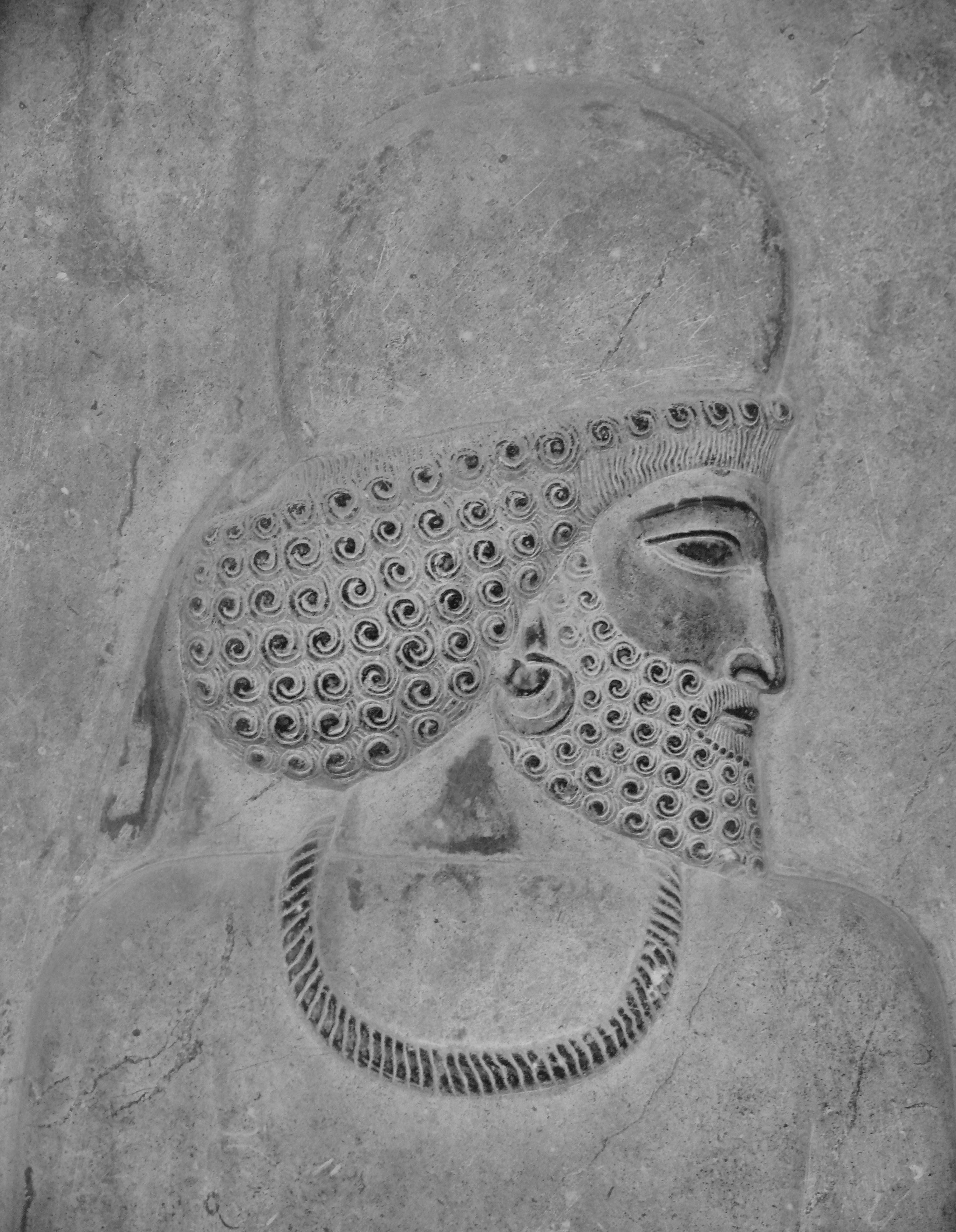
Photo credit: Alborzagros. CC.
Jenny Rubin and others hurt by a 1997 terrorist attack in Israel filed a 92 page brief yesterday in the First Circuit Court of Appeals. Rubin et al. v. Islamic Republic of Iran v. Museum of Fine Arts and Harvard University et al. is a case where the appellants seek to enforce a judgment awarded to them under the Terrorism Risk Insurance Act of 2002 (TRIA) by acquiring cultural artifacts claimed to be owned by Iran. The objects sought are located in Boston and Cambridge, Massachusetts. Meanwhile, Rubin et al. have also filed an appeal of their Seventh Circuit court case with the U.S. Supreme Court. That case involves an attempt to attach objects located at museums in Chicago.
Read the rest here
Go to the chronicle of news on Persepolis
See linked data for Persepolis via awld.js
Wednesday, February 15, 2012
Kirsty Mason on Thomas Harrison, Writing Ancient Persia. Classical essays
In Bryn Mawr Classical Review 2012.02.29 Kirsty Mason reviews:
Thomas Harrison, Writing Ancient Persia. Classical essays. London; New York: Bristol Classical Press, 2011. Pp. 190. ISBN 9780715639177. $24.00 (pb).
She cites Harrison's discussion of the use of Persepolis Fortification Archive materials:
Persepolis in Pleiades http://pleiades.stoa.org/places/922695
Thomas Harrison, Writing Ancient Persia. Classical essays. London; New York: Bristol Classical Press, 2011. Pp. 190. ISBN 9780715639177. $24.00 (pb).
She cites Harrison's discussion of the use of Persepolis Fortification Archive materials:
"Looking at Persian sources, primarily the Persepolis tablets, Harrison discusses the problems with this source of information: namely that they derive from a very specific time period (late 6th and early 5th centuries) and location and are written in Elamite and thus do not reflect the entire empire".There has already been a response to the review.
"When discussing royal women, who are often depicted as crueller than the Persian kings, Harrison notes two things: first: that Classical depictions show Persian royal women acting primarily in the interests of their families, holding vast power and demonstrating masculine traits. However, Achaemenid scholarship views such depictions as clichéd and the result of misogyny or ignorance and, therefore, to be dismissed. Second: that despite the above opinions dismissing Greek accounts, most Greek sources do loosely support Persian sources, in particular the Persepolis tablets which show "enterprising and resolute" Persian royal women. It is surmised that Achaemenid scholarship has too great a desire to reverse the negative reputation of Persian women noting that it is not only Persian women in Greek sources who are depicted as cruel in the interests of their families".
Persepolis in Pleiades http://pleiades.stoa.org/places/922695
Tuesday, February 14, 2012
TAPYROI AND TABLETS; A BOAR HUNT
A pair of articles appeared in a recent issue of Bulletin of the Institute of Classical Studies. Accessible on line to anyone whose institution licenses the journal:
Persepolis in Pleiades http://pleiades.stoa.org/places/922695
Bulletin of the Institute of Classical Studies
© Institute of Classical StudiesDecember 2011
Volume 54, Issue 2
Article first published online: 1 DEC 2011 | DOI: 10.1111/j.2041-5370.2011.00020.x
Article first published online: 1 DEC 2011 | DOI: 10.1111/j.2041-5370.2011.00021.x

Persepolis in Pleiades http://pleiades.stoa.org/places/922695
Friday, February 03, 2012
NIAC Alert: Persepolis Tablets Threatened By Senate Sanctions Bill
National Iranian American Council (NIAC) has posted the following:
Alert: Persepolis Tablets Threatened By Senate Sanctions Bill
A Senate committee voted yesterday to make it easier for individuals to seize and auction off priceless ancient Persian antiquities held by American museums and universities in order to collect court judgments against the Iranian government. Already, lawyers are in court trying to seize the Persepolis Tablets – priceless 2,500 year-old artifacts that provide a unique first-hand account of life in the Persian Empire under Darius the Great. If this proposal becomes law, the Persepolis Tablets are almost certain to be confiscated from the universities and museums and sold to the highest bidders.
The Persepolis Tablets are a part of our rich heritage that should continue to be shared at museums and universities, not auctioned off like cheap items on eBay.
Take action now to protect our heritage!
This proposal by Senator Menendez (D-NJ) will soon be considered by the full Senate as part of its latest Iran sanctions bill – which builds on the broad Central Bank of Iran sanctions spearheaded by Senator Menendez just last December. This is perhaps one of the starkest examples yet of how broad sanctions punish ordinary Iranians and Iranian Americans, not the Iranian government.
With the Iranian people facing unprecedented repression at home and economic warfare from abroad, we must stand united against collective punishment and the looting of our very heritage.
The Iranian government has harmed many innocent lives, and its victims should receive just compensation. But we must be able to protect the rights of victims without attacking our Iranian heritage.
Take action now to stop Congress from looting our history!Persepolis in Pleiades http://pleiades.stoa.org/places/922695
NIAC has led the Iranian-American community’s efforts to protect the Tablets, fighting in the courts, the Congress, and even the White House to protect them. In order to permanently secure these and all other priceless Persian artifacts under threat, NIAC has called on Congress to change the law to protect all cultural artifacts held by American museums and universities so our heritage will never again come under attack
Wednesday, January 25, 2012
RIP Herbert Harry Paper
Herbert H. Paper died January 23, 2012 in Cincinnati. A notice of his death appears in the January 25 2010 Cincinnati Enquirer. Another, by Jonathan D. Sarna appeared January 30, 2011 in H-Judaic.

His faculty profile at the website of the Hebrew Union College-Jewish Institute of Religion reads:
Why is he mentioned here on the Persepolis Fortification Archive Blog?
He was a student of George Cameron, and a member of the first generation of scholars focusing on Elamite language at the University of Chicago following World War Two. He wrote his dissertation under Cameron in the Department of Oriental Languages and Literatures, accepted in August 1951. It was subsequently published as The Phonology and Morphology of Royal Achaemenid Elamite by the University of Michigan Press in 1955. It is available online from the HATHI Trust Digital Library. That digital version was mentioned here on this blog in May 2009.
The University of Michigan Faculty History Project has a cursory profile.
WorldCat Identities has Paper, Herbert H. (Herbert Harry) 1925-
He is alleged to have said:
His faculty profile at the website of the Hebrew Union College-Jewish Institute of Religion reads:
Dr. Paper is Professor Emeritus of Linguistics and near Eastern Languages, and is the Editor of the Hebrew Union College Annual, HUC-JIR/Cincinnati. He received a doctorate from the University of Chicago. Dr. Paper taught at the University of Michigan at Ann Arbor, and joined HUC-JIR as the Dean of Graduate Studies. His specialties are Persian studies, concentrating on the history of the Persian language and on the ancient languages of Iran, and Yiddish literature.
Education
Lecture Titles
- Ph.D., University of Chicago (1951)
- History of the Yiddish Literature
- The Languages of the Jews Throughout History
- Sholem Aleichem as a Social Critic
Why is he mentioned here on the Persepolis Fortification Archive Blog?
He was a student of George Cameron, and a member of the first generation of scholars focusing on Elamite language at the University of Chicago following World War Two. He wrote his dissertation under Cameron in the Department of Oriental Languages and Literatures, accepted in August 1951. It was subsequently published as The Phonology and Morphology of Royal Achaemenid Elamite by the University of Michigan Press in 1955. It is available online from the HATHI Trust Digital Library. That digital version was mentioned here on this blog in May 2009.
The University of Michigan Faculty History Project has a cursory profile.
WorldCat Identities has Paper, Herbert H. (Herbert Harry) 1925-
He is alleged to have said:
It is well to remember that a Martian observing his first baseball game would be quite correct in concluding that the last two words of the National Anthem are: PLAY BALL!
Friday, January 20, 2012
MA Thesis: Culture in Court --- The Saga of The Persepolis Tablets A Case Study
Culture in Court --- The Saga of The Persepolis Tablets A Case Study
Ahouraiyan, Taraneh; Warren-Findley, Jannelle; Warrren-Findley, Jannelle; Thompson, Victoria; Smith, Louis. Arizona State University, 2011. 2011. 1502753.
ISBN 9781267060761
MA Thesis Arizona State University
Persepolis in Pleiades http://pleiades.stoa.org/places/922695
Ahouraiyan, Taraneh; Warren-Findley, Jannelle; Warrren-Findley, Jannelle; Thompson, Victoria; Smith, Louis. Arizona State University, 2011. 2011. 1502753.
ISBN 9781267060761
MA Thesis Arizona State University
ProQuest document ID 912168904
This thesis explores the implications that the outcome of a certain U.S. lawsuit involving antiquities could have on practices and programs in the United States, related to cultural heritage and history. This paper examines the Rubin et al case, which sought to attach a collection of ancient Persian artifacts (known as The Persepolis Tablets) as a source of legal compensation.You may download this document through your Library.
Presented as a case study, and using primary and secondary research sources, this paper analyzes the Rubin et al lawsuit and the factors that led to its initiation, and seeks to determine how and why adverse consequences could result from its final ruling.This thesis demonstrates that the final decision in the lawsuit could leave a negative impact on a number of practices related to cultural heritage in the United States, especially with regards to cultural and academic institutions such as museums and universities.
Persepolis in Pleiades http://pleiades.stoa.org/places/922695
Saturday, December 17, 2011
News: The Truth Behind the Tablets
Archaeology Magazine
Volume 65 Number 1, January/February 2012
The rush to document thousands of ancient texts before they are sent back to Iran, or sold, reveals the daily workings of the Persian Empire
Tens of thousands of clay tablets and fragments from Persepolis are written in cuneiform to express Elamite, an ancient language of western Iran.
(Courtesy Persepolis Fortification Archive Project, Oriental Institute)

Tensions between Iran and the United States have rarely run higher, with both governments sparring over alleged terror plots, disputing the nature of Iran’s nuclear program, and vying to influence the uprisings across the Arab world. But in Chicago and Boston courtrooms, the two countries have found rare common ground—neither wants ancient tablets from the royal palace of Persepolis in Iran to end up on the auction block. To the relief of scholars, two recent court rulings may give them their joint wish, preserving open access to what is the most significant source of information on the ancient Persian Empire uncovered to date.
In the early 1930s, during excavations of Persepolis, University of Chicago archaeologist Ernst Herzfeld unearthed tens of thousands of fragments of fragile clay tablets dating from about 500 B.C. The fragments were packed into 2,353 cardboard boxes and shipped to the university’s Oriental Institute. The Iranian government of the day allowed the export, with the understanding that the tablets would be translated and then returned. But the task of piecing together and understanding the vast number of fragments has been under way for more than seven decades and the majority of the collection remains in Chicago. Now, fearing loss of the archive, the university has moved into high gear to create thousands of digital images of the tablets, which record the day-to-day accounts of the empire during the reign of Darius the Great (521–486 B.C.) and include records of those traveling on behalf of the king, lists of workers’ rations, and careful notation of offerings made to deities.
Researchers hope to have most of this intensive effort completed within the next two years. To get the job done, the institute has assembled what Gil Stein, director of the Oriental Institute, calls a “dream team” of textual scholars, archaeologists, and technical experts in digital cataloguing to take images of the tablets and make them available for public use. Translations are also being done, though it will take much longer to complete that daunting task. “Whether they are seized for sale or the government of Iran demands them back, the tablets will be out of the building soon. We all understand how important and urgent this is,” says Stein.
To read more, find ARCHAEOLOGY in your local newsstand or bookstore, or click here to buy a copy of the issue online. And if you'd like to receive ARCHAEOLOGY in your mailbox, click here to subscribe.

Andrew Lawler is a contributing editor at ARCHAEOLOGY.
Subscribe to:
Posts (Atom)